SiNergi Research Team of PPNP and CERI Visits Lasi Reborn: Young Generation Revives Coffee Cultivation in Nagari Lasi
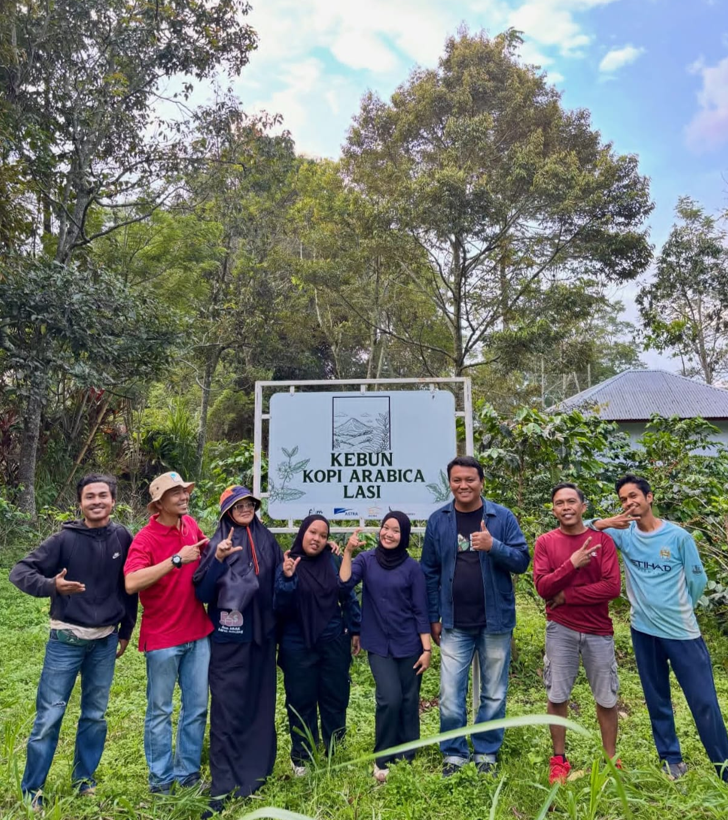
Agam Regency, June 19, 2026 – The SiNergi research team of Payakumbuh State Agricultural Polytechnic (PPNP), led by Prof. Dr. Rince Alfia Fadri, S.ST., M.Biomed., along with the team of Fidela Violalita, M.P., and Henny Fitri Yanti, M.Sc., accompanied by researchers from the Coffee Education Research Institute (CERI), conducted a field visit to Lasi Reborn in Nagari Lasi, Canduang District, Agam Regency, West Sumatra. This activity is part of research on various specialty coffee developments and the application of innovation in the coffee supply chain in West Sumatra.
Prof. Dr. Rince Alfia Fadri stated that Lasi Reborn is an example of how collaboration between the younger generation and farmers can create positive change. According to her, coffee development requires synergy between innovation, farmer mentoring, and technology application in order to compete in an increasingly competitive market.
Born from the Spirit of the Young Generation
Efforts to restore the glory of Arabica coffee in Nagari Lasi have been initiated since 2013. The initiative was pioneered by Suardi Mahmud Bandaro Putiah, who at that time served as the Mayor of Nagari Lasi, together with the Selaras Alam Group. This movement received support from Rumah Perubahan and Pertamina through a program to replant Arabica coffee as an initial step to revive the commodity that once became the region's identity.
This spirit was then continued by the younger generation. In 2019, a group of young people led by Rinal Wahyudi established Lasi Reborn as a platform to develop Arabica coffee with a more modern approach. Not only focusing on improving product quality, Lasi Reborn also builds partnerships with farmers through mentoring in cultivation, post-harvest processing, and marketing. The presence of this community is an important part of efforts to restore the glory of Nagari Lasi Arabica coffee while increasing economic value for the local community.
Strengthening the Role of Local Farmers
Lasi Reborn Coffee collaborates with all sectors, from farmers, business actors, cafes, to the surrounding community. Currently, Lasi Reborn mentors around 53 farmers who are members of two farmer groups. Nurseries are managed independently by the group, then seedlings are distributed to farmers to be planted until they produce a harvest, which is then marketed at prices that follow market conditions. This approach provides opportunities for farmers to increase productivity while maintaining the quality of the harvest.
Cultivation as the Key to Coffee Quality
The research team also reviewed the cultivation practices applied in the field. From coffee seedling nurseries to the planting process, everything is carried out by Rinal and his colleagues. Then, plant maintenance is carried out by pruning unproductive branches so that nutrients are more focused on the main branches where coffee cherries grow. Fertilization is done using manure or compost as an effort to maintain soil fertility.
Lasi Reborn places quality as the main focus in every stage of production. This starts from the harvesting process which is carried out selectively by only picking coffee cherries that are fully ripe. After harvesting, coffee cherries are immediately processed to maintain raw material quality before entering the fermentation, washing, and drying stages.
This approach is carried out to produce green beans that have more uniform quality while maintaining the distinctive flavor characteristics of Lasi Arabica coffee. Several processing methods, such as washed process, honey process, and natural process, continue to be developed to produce diverse flavor profiles according to market needs.
The Lasi Reborn farmer group currently manages around 14 hectares of land with an average production reaching more than 1.3 tons of wet coffee cherries every week. In addition, the group also receives a supply of approximately 600–700 kg of coffee cherries from community gardens covering 5–6 hectares. This production is marketed not only in various cities in West Sumatra such as Bukittinggi, Padang, Pariaman, Payakumbuh, Solok, and Pasaman, but has also reached Jakarta, Pekanbaru, Batam, Palembang, and Yogyakarta.
Innovation to Penetrate Wider Markets
Not only focusing on cultivation, Lasi Reborn has also begun to strengthen the downstream aspect through value-added coffee processing. Green beans that have gone through the sorting process are then marketed to various coffee business actors or processed into roasted coffee with roasting profiles adjusted to maintain the character of their aroma and flavor.
Lasi Reborn dares to adopt blockchain technology to increase coffee supply chain transparency. A QR Code-based supply chain recording system has been introduced as part of product traceability development, allowing product origin information to be more easily traced by consumers, thereby increasing consumer trust. These efforts have also opened up promotional opportunities at the international level, including participation in the Amsterdam Coffee Festival 2025. In addition, the presence of Kopi Lasi Cafe, which has been operating since 2020, serves as an educational facility for the public to learn about coffee cultivation and processing processes up close.
Developing Sustainable Coffee
The spirit of sustainability is also an important part of Lasi Reborn's development. Various coffee processing wastes are reused as organic fertilizer or other value-added products, thereby reducing waste while supporting a more environmentally friendly agricultural system.
For the SiNergi Research Team of Payakumbuh State Agricultural Polytechnic (PPNP) together with the Coffee Education Research Institute (CERI), the practices implemented at Lasi Reborn show that coffee development does not only depend on the quality of the harvest, but also on strengthening farmer institutions, technological innovation, and the application of sustainability principles. The combination of these three aspects is important capital in increasing the competitiveness of Indonesian Arabica coffee in national and international markets, as well as a real example that coffee can be a driver of the creative economy while strengthening regional identity.
Related Articles
SiNergi Research Team of PPNP and CERI Studies Agroforestry-Based Coffee Development at Beranda Coffee & Roastery
Read More
SiNergi Research Team of PPNP and CERI Visits Tanmudo Arabica Coffee Estate in Solok Regency, West Sumatra
Read More
SiNergi Research Team of PPNP and CERI Visits Tiga Dara Organic Coffee Farm, Highlights the Role of Women in the Indonesian Coffee Industry
Read More